
How to Get Ahead of the FSA Acreage Reporting Deadline This Year
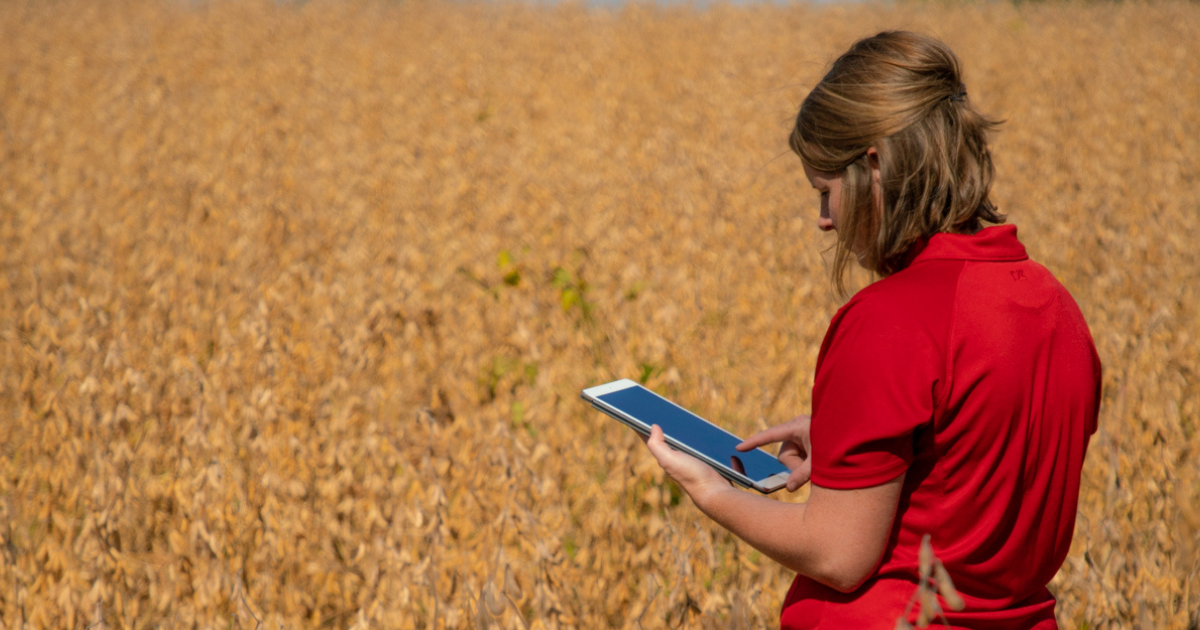
Every year it plays out the same way. The FSA acreage reporting deadline is circled on the calendar, planting wraps up, and then June arrives and suddenly July feels very close. Fields need attention, equipment needs repairs, and somewhere in a truck cab or kitchen drawer there are scribbled planting dates, field maps, and planting notes that still need to become an official acreage report.
Farmers who sail through reporting season are not working faster in July. They are making smarter decisions in April and May. Here is how to do the same.
What FSA Actually Needs From You
Before you can organize your data, it helps to know exactly what FSA requires. For most producers, a complete acreage report includes:
- Planted acres by crop and field, to the nearest acre or tenth of acre
- Field boundaries aligned with FSA Common Land Units (CLUs)
- Planting dates and intended use of each crop
- Any prevented planting, replanting, or failed acreage
- Share arrangements if the land is rented or share-cropped
- Irrigation status for each field
If any of these items are missing, inconsistent with prior years, or misaligned with your CLU boundaries, expect a follow-up from your local FSA office and delays before your report is accepted.
5 Mistakes That Slow Farmers Down Every Year
- Relying on memory instead of records
When you planted field 14 in early May, you knew exactly how many acres went in. By July, after two more planting passes and a stretch of 14-hour days, that number is a best guess. Records captured at the time, from your planter monitor or farm management software, are far more reliable than memory under pressure.
- Field boundaries that don't match FSA CLUs
CLUs are the official land unit maps FSA uses to identify fields. If your precision ag system uses different boundary files, the acreage numbers will conflict with what FSA has on file. This is one of the most common reasons reports get flagged. Review your CLU data before the season, not during reporting.
- Not documenting prevented planting in real time
If wet conditions or other circumstances prevent you from planting a field, that acreage still needs to be reported. The window for filing prevented planting claims is tight, usually within 15 days of the final planting date for the crop. Waiting until the end of the season means you may miss the eligibility window entirely.
- Inconsistent data across systems
Many farms use several different tools: a planter monitor, a farm management platform, an agronomist's mapping software, and paper field notes. When these systems don't connect, you end up with slightly different acre counts for the same field. FSA will accept one number, and deciding which one is correct under deadline pressure is a stressful spot to be in.
- Waiting until the last two weeks to visit the FSA office
Local FSA offices see a significant surge in walk-ins near the deadline. Staff are helpful, but availability gets tight and small errors discovered at the counter can mean multiple trips. Farmers who arrive with a clean, complete digital report move through the process quickly. Farmers who arrive needing help reconstructing records do not.
How Digital Tools Make This Easier
Most farms are not missing data. They are missing organization. The planting records exist, but they are spread across two devices, a notebook, and last year's folder.
Digital acreage reporting platforms like MyAgData are built to solve this. Instead of manually reconciling data from multiple sources before a deadline, the system pulls your existing precision ag data, structures it to FSA and RMA reporting standards, and produces a report that is ready to submit rather than one that still needs cleanup.
- Planted acres flow in from your planting equipment throughout the season
- Field boundaries are validated against FSA CLU data automatically
- Inconsistencies are flagged early, when they are easy to fix
- Your acreage report builds progressively, so July becomes a review rather than a rebuild
- Reports are formatted to FSA and RMA standards, reducing office corrections
The goal is not to add another tool to your workflow. It is to connect the data you are already generating into a format that works when deadline season arrives.
Start getting organized now. The farmers with the smoothest July are the ones who prepared in the spring.


Latest information about MyAgData
.png)
Farm Talk Podcast: Galesburg, North Dakota Grower Ben Bring on MyAgData
.png)
MyAgData Featured on Red River Farm Network: Improving Acreage Reporting Accuracy
.png)
MyAgData Featured on Agriculture of America: Save Time and Stress with Digital Acreage Reporting
.png)
.png)